
Top things to do in Vilnius
There are plenty of things to do in Vilnius, but I do not think every traveller needs the same checklist.
That is why I do not really like “must-see” lists.
We all travel differently. What feels essential to one person can be completely uninteresting to someone else. If you do not like history, you do not need to spend your Vilnius trip inside historical museums. If you do not enjoy art, you do not need to force yourself into galleries just because someone called them unmissable.
So this is not a strict checklist of places you must visit in Vilnius. When I say “top things to do in Vilnius”, I mean places that are well-known, often recommended to visitors or useful for understanding the city. Some are classic sights, some are viewpoints, and some are museums, public spaces or local stops. Use them as options, then choose what fits your interests, time and energy.
I have arranged the list roughly by city area, so it is easier to understand which places sit near each other. The order is not a strict walking route, but it should help you avoid jumping randomly across the map.
If your time is limited, start with Cathedral Square, the Old Town and Užupis, then add the farther places only if they genuinely interest you.
Start with Cathedral Square and Gediminas Hill
Start around Cathedral Square if you are visiting Vilnius for the first time. Several of the city’s best-known sights are close together here, so you can get a strong first impression without moving far. You also get a good mix of history, views and the classic first impression of central Vilnius.
Walk around Cathedral Square
Cathedral Square is one of the main public spaces in Vilnius and a natural place to start exploring the city. Vilnius Cathedral, the Bell Tower and the Palace of the Grand Dukes are all around the square, with Gediminas Castle Tower visible on the hill nearby.
I also like this square because of the Gediminas statue. It gives the space a clear focal point and makes the area feel connected to the city’s history before you even go inside anywhere.

The Bell Tower stands separately in the square, so it is hard to miss. Choose it if you want a view over Cathedral Square without walking up to a hilltop viewpoint. If you are short on time, pick the view that fits your route best instead of trying to visit every tower in Vilnius.
Visit Vilnius Cathedral
Vilnius Cathedral is one of the most recognisable buildings in the city centre. Even if you only see it from the outside, it helps explain why Cathedral Square is such an important starting point for Vilnius sightseeing.
The white classical exterior makes it look quite different from many churches in the Old Town. You will probably pass the Cathedral more than once, because so many central routes start or end around the square.
Visit the Palace of the Grand Dukes
The Palace of the Grand Dukes gives more historical context before you walk deeper into the Old Town. Add it when you want the history behind Cathedral Square, not only the view of the buildings from outside.
It is best for travellers who enjoy exhibitions, history and slower indoor sightseeing. If you prefer to stay outside, you can still see the building from the square and continue towards Gediminas Hill or Pilies Street.
Climb up to Gediminas Castle Tower
Gediminas Castle Tower is one of my personal favourites in Vilnius. The view helps you understand how the Old Town, the newer parts of the city and the rivers sit together.
I also enjoy the exhibition inside the tower, especially the parts connected with armour and old weapons. That may be partly because I like medieval-style armour and weapons in general, probably thanks to computer games. Even without that interest, the tower is still one of the most classic places to visit in Vilnius.
Walk up to the Three Crosses
The Three Crosses viewpoint is another famous place for a panorama, but the walk up takes more effort. Expect a proper uphill climb rather than a tiny detour.
On a clear day, the view is beautiful. If it is foggy, raining or visibility is poor, I would probably choose another viewpoint instead. The main reason to go up is the panorama, so bad weather can make the effort less rewarding.
Read more: 2 days in Vilnius: what to see on your first visit
Continue to Vilnius University and the historic centre
After Cathedral Square, it is easy to continue towards Pilies Street, Vilnius University and the smaller streets around the Presidential Palace. Go slowly here, because a lot of the charm is in courtyards, side streets and details you might miss if you only follow the main route.
Walk down Pilies Street
Pilies Street is one of the most touristy streets in Vilnius, but I still enjoy walking through it. There is something about this part of the Old Town that feels good to me, even when it is busy or clearly aimed at visitors.

It connects Cathedral Square with the deeper Old Town, so you will probably pass it anyway. Walk it without overthinking it. Sometimes the classic tourist street is popular for a reason.
Visit Vilnius University
The Vilnius University ensemble is one of those places where I always get a good feeling while walking around. The courtyards, old buildings and passages make it feel like a small world inside the Old Town.
The Church of St Johns is part of the same ensemble, so you can include it while walking through the university courtyards. It feels less like a separate detour and more like another part of the same historic complex.
You can also go up the Vilnius University Bell Tower if you want a view from inside the Old Town itself. It makes most sense if you are already visiting the university and want one more layer to that stop.
Stop by the Presidential Palace and its courtyard
The Presidential Palace fits naturally after Vilnius University because it sits only a short walk away. From the front side, you may see official ceremonies or commemorations if you are in Vilnius on important dates, such as January 13 or February 16.

It is one of those places where Vilnius feels more official than cosy. The Palace is the President’s official workplace, so the area is used for ceremonies, formal visits and commemorations.
The inner courtyard has a fountain, and you can also get a view towards it from above after passing through the Alumnatas courtyard.
Walk along Stiklių Street
Stiklių Street is one of the prettiest small streets in Vilnius. It has narrow curves, colourful details and a softer atmosphere than the main tourist streets.
For me, it has a little of the same feeling as Montmartre in Paris, or smaller streets in southern Europe where tables stand outside and the whole place feels made for wandering. I would not over-romanticise it, but it is a lovely street to include if you enjoy pretty corners and café-style Old Town views.
Read more: First time in Vilnius: what to know before you go
Užupis and the eastern side of the Old Town
Užupis sits just to the side of the main Old Town route, and many visitors enjoy it because it feels less formal than the classic central streets. Nearby, you can also connect it with some of the prettiest church views and greener stops near the Vilnelė River.
Explore Užupis
Užupis is one of the best-known neighbourhoods in Vilnius for visitors. It has its own constitution, the Užupis Angel statue, small riverside corners and a creative reputation that has become part of its identity.
I do not personally place Užupis at the centre of my favourite Vilnius walk, because it sits a little to the side. Many visitors like it though, and I understand why: it is informal and still close enough to add without turning the day into a separate trip.
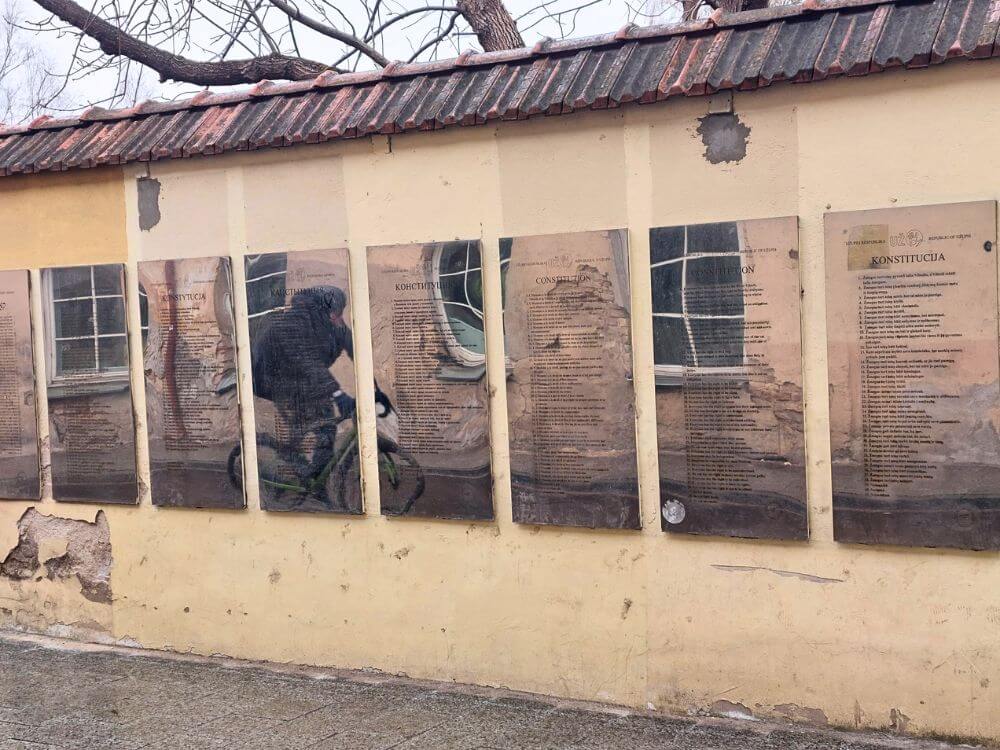
The Užupis Constitution is displayed on mirrored plaques along the street, while the Užupis Angel statue and the bridge into the neighbourhood are easy to include while you are there. None of these stops takes long on its own, but together they show why Užupis has such a specific place in Vilnius.
Walk along Literatų Street
Literatų Street is a small street decorated with artworks connected to writers and literature. It sits close to the main Old Town route, so it works well as a short, low-effort detour.
You do not need much time here. Walk slowly, look at the details and continue towards the next nearby stop.
See St Anne’s Church and the Church of St Francis of Assisi
St Anne’s Church is one of the most photographed churches in Vilnius, and it is easy to see why. Its red brick Gothic facade stands out from the surrounding streets and looks especially beautiful from the outside.
Next to it, you will find the Church of St Francis of Assisi, often called the Bernardine Church. Seeing them together gives you one of the prettiest church views in the Old Town, and Bernardine Garden is right nearby if you want a green break afterwards.
Take a break in Bernardine Garden
Bernardine Garden is one of the places where I genuinely like spending time in Vilnius. It is central, green and easy to add when you are walking near the Vilnelė River, St Anne’s Church or Užupis.
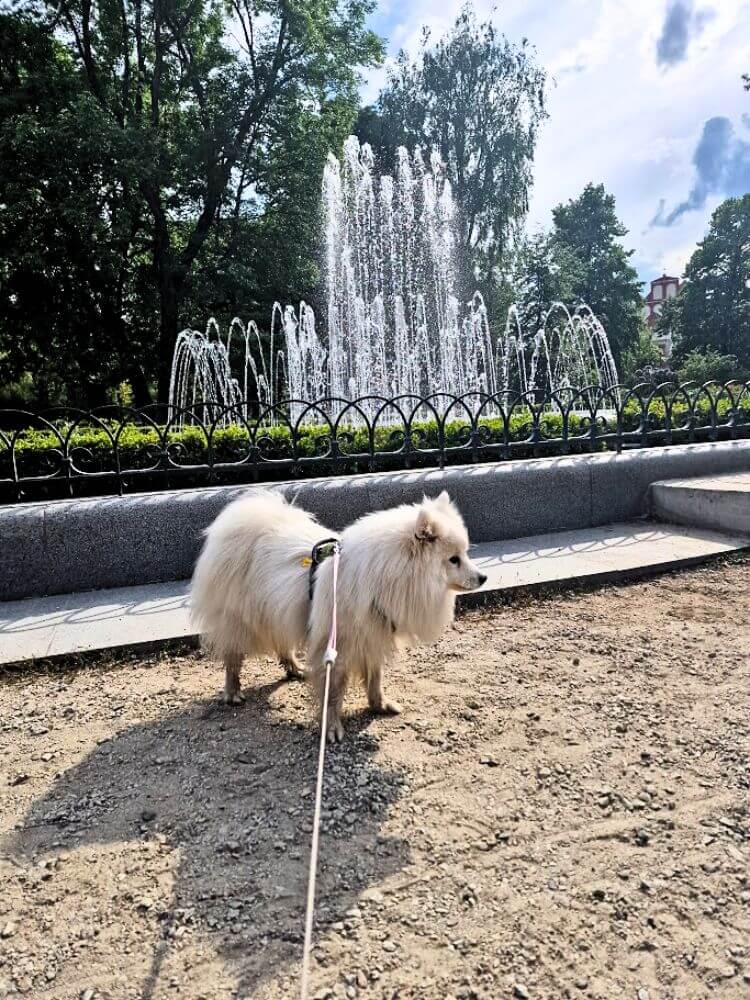
I would not treat it as a major sightseeing task. It works better as a pause. Sit down, slow the day a little and enjoy having a proper green space so close to the Old Town.
Read more: Free things to do in Vilnius
Town Hall, Gate of Dawn and local stops
The southern side of the Old Town has a slightly different feeling from the Cathedral Square route. You still get historic streets and well-known landmarks, but this direction also brings you closer to market life, the station side and a few places that feel less polished than the main tourist path.
Stop by Vilnius Town Hall
Vilnius Town Hall sits in another important Old Town square and works as a useful point on a wider walk through the southern part of the centre. The square is spacious, simple and easy to pass through on the way to other stops.
Nearby, you can also look for the Vilnius Portal. It is a public art and technology installation that connects Vilnius with people standing near portals in other cities through a live video link. The connected cities can change, so treat it as a fun extra rather than something to build your whole route around.
Walk to the Gate of Dawn
The Gate of Dawn is one of the most important religious and historical places in Vilnius. It sits at the edge of the Old Town and appears in many first-time sightseeing routes.
Even if you are not religious, the gate is worth knowing about because it is one of the city’s best-known landmarks. It also gives you a clear reason to walk all the way through this side of the Old Town instead of staying only near Cathedral Square.
Browse Hall Market
Hall Market is easy to notice from the outside because the building has a distinctive shape and a slightly different look from the Old Town streets around it. It works as a casual stop if you are walking near the Gate of Dawn or coming from the station side.
I have only been there a few times, mostly when friends took me for onigiri. We grabbed onigiri and coffee from a nearby coffee spot, which is probably a good way to treat this place: not as a major sightseeing stop, but as somewhere to drop in if you want something more local and casual.
Visit MO Museum
MO Museum is one of the best-known modern art museums in Vilnius, so it often appears in recommendations for visitors. I have not visited it myself yet, so I would not present it as my personal favourite.
Add it if contemporary art interests you or if you want an indoor stop near this side of the centre. If art museums are not usually your thing, this is an easy place to skip without feeling guilty.
Gediminas Avenue and the modern centre
Gediminas Avenue takes you away from the narrow Old Town streets and into a wider, more formal part of the centre. Walk this way for public buildings, recent history and a less touristy view of central Vilnius.
This part of the city is less cosy than the Old Town, but it gives you more context about modern Lithuania, public life and recent history.
Walk along Gediminas Avenue
Gediminas Avenue is the main avenue running through the modern centre of Vilnius. It connects the Cathedral Square area with Lukiškės Square and the area around Parliament.
The street is wide and lined with public buildings, shops, cafés and institutions. It helps you see Vilnius beyond its historic core.
Stop at Lukiškės Square
Lukiškės Square was renovated a few years ago and now works more like an everyday city space than just a formal square. There are paths, lawns and plenty of open space, so it is easy to pause here if you are walking along Gediminas Avenue.
In warmer weather, the square feels especially local. Children often splash around the fountain, people sit on the grass and in summer there is usually a small outdoor reading area where you can sit down with a book.
Visit the Museum of Occupations and Freedom Fights
The Museum of Occupations and Freedom Fights, often called the KGB Museum, is one of the most powerful museums in Vilnius. It is not a light stop, but it gives important context about Lithuania’s 20th-century history.
This museum left a very strong impression on me when I visited it as a school student. It stayed with me so much that I went back a second time. That probably sounds strange for such a heavy place, but I mean that it felt important, memorable and worth understanding properly.
Take a tour of Lukiškės Prison
Lukiškės Prison made a very strong impression on me, especially the guided tour inside. It is one of those places where the building, the stories and the atmosphere stay with you much more than a quick look from the outside would.
It has also become a cultural venue, so people now visit it in a different way than they would have in the past. If the tours are available during your trip, I would treat it as a proper activity, not just a building to walk past.
See the Seimas Palace
The Seimas Palace is Lithuania’s parliament building, but the area around it matters for more than politics. Important commemorations also happen here, especially around dates connected with Lithuanian independence and January 13.
On some commemorative evenings, bonfires are lit and people gather around them, sing and remember the events of 1991. If you are in Vilnius at that time, this area can feel very different from a normal sightseeing stop.
Stop by the Martynas Mažvydas National Library
The Martynas Mažvydas National Library is not only a place for books. After its renovation, it became a much more modern public space, with areas where people come to work with laptops, attend events or join workshops.
It sits close to the Seimas Palace, so it is easy to add when you are already walking through this part of the modern centre.
See the January 13 Memorial
The January 13 Memorial is small and easy to miss, but it adds important context to the area around the Seimas Palace. I only properly noticed it myself recently, which says a lot about how easily you can walk past meaningful places in your own city.
Nearby, you can also see a preserved barricade wall from the time when people gathered to defend Lithuania from Soviet aggression in 1991. It is not a big attraction, but it makes this part of Vilnius feel more real and historically grounded.
Paupys, Subačius viewpoint and places farther out
Paupys and Subačius viewpoint are easier to add when you are already near the eastern side of the Old Town. The Bastion also fits well here because it sits close to Subačius viewpoint. The TV Tower needs more effort because it is farther from the centre, so I would add it only if the view or the history interests you.
Explore Paupys
Paupys is a newer area near the Old Town, and I personally really like its atmosphere. It feels modern, neat and easy to add after the older streets around Užupis.
The easiest place to add here is Paupio turgus (Paupys Market). It is a food hall with many different places to eat, but not in the classic restaurant format where every café has its own separate tables. You order from the place you like, find a shared table and wait until your food is ready to pick up.
Visit the Bastion of the Vilnius Defensive Wall
The Bastion of the Vilnius Defensive Wall is a good stop if you like older city defences, underground spaces or military history. I especially enjoy this kind of place because of the weapons and armour displays.
It also sits close to Subačius viewpoint, so the two places are easy to combine. If you are already walking up that way, the Bastion does not need to become a separate trip.
See Vilnius from Subačius viewpoint
Subačius viewpoint gives you one of the easiest wide views over the Old Town. It is a good option if you want a panorama without making the longer climb to the Three Crosses.
The view works best in clear weather. As with most viewpoints, fog and rain can make it less rewarding, so I would check the sky before adding it to your route.
Go up the TV Tower
The TV Tower is farther from the centre than most places on this list, so it is better to plan it as a separate stop rather than squeeze it into an Old Town walk. It has strong historical importance for Lithuania, especially because of the events of January 1991.
You can go up the tower for a wide view over Vilnius, and there is also a restaurant at the top. Sometimes there are extra activities too, such as rope jumping, but I would check what is currently available before planning around it.
Read more: Public transport in Vilnius
Final thoughts
There are many things to do in Vilnius, but the best trip is not the one where you complete the longest checklist. Some places will make sense for your interests, and some will not. That is completely fine.
If you like history, you will probably want more time for the museums, towers and memorials. If you prefer wandering, leave more space for the Old Town streets, Užupis, Paupys and small breaks in places like Bernardine Garden.
Use this list as a starting point, not as a rulebook. Vilnius is much easier to enjoy when you choose places that match your actual interests instead of trying to complete someone else’s idea of a perfect trip.
